


The world of eCommerce is evolving rapidly, and Shopify merchants are constantly looking for ways to improve performance, deliver better customer experiences, and stay ahead of competitors. One approach that has gained significant attention in recent years is Headless Shopify.
But is Headless Shopify actually worth the investment, or is it simply another technology trend that most businesses don’t need?
In this guide, we’ll explain what Headless Shopify is, how it works, its advantages and disadvantages, and help you determine whether it’s the right choice for your business.
What Is Headless Shopify?
Traditionally, Shopify handles both the frontend (what customers see) and the backend (products, orders, inventory, and checkout) within a single platform.
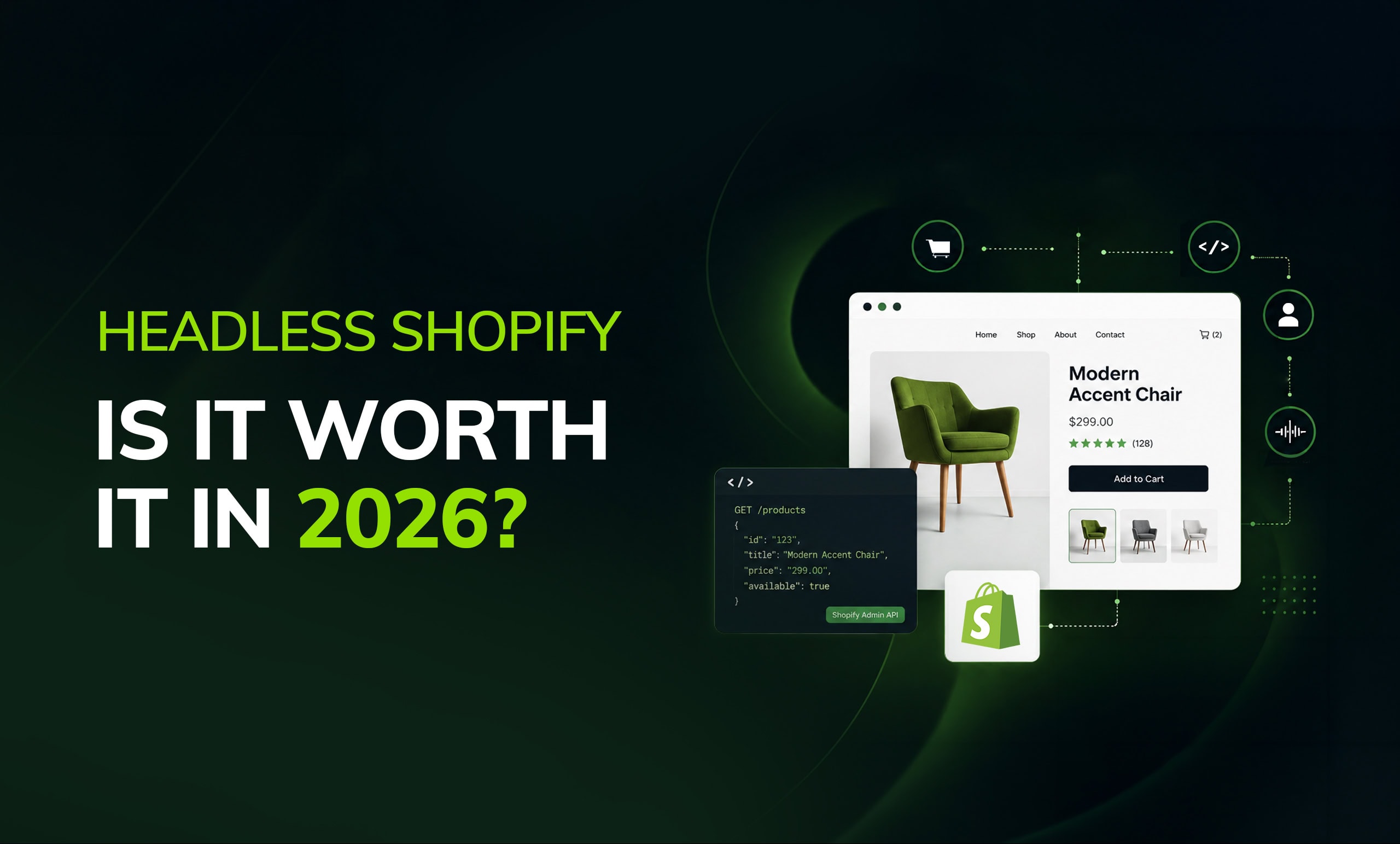
With Headless Shopify, the frontend is separated from Shopify’s backend. Shopify continues to manage products, inventory, checkout, payments, and customer data, while a custom frontend built with technologies such as React, Next.js, or Shopify Hydrogen delivers the customer experience.
This separation allows businesses to create highly customized storefronts without being limited by Shopify’s theme architecture.
Simply put, Shopify becomes the commerce engine, while your custom frontend becomes the customer-facing experience.
How Does Headless Shopify Work?
In a headless setup, the frontend communicates with Shopify using APIs.
When a customer visits your store:
- The custom frontend requests product information from Shopify.
- Shopify returns the product data through its APIs.
- The frontend displays the content to the customer.
- Orders, inventory updates, and checkout processes continue to be handled by Shopify.
This architecture enables developers to build faster and more flexible experiences while maintaining Shopify’s powerful eCommerce infrastructure.
Benefits of Headless Shopify
1. Superior Website Performance

Performance is often the primary reason brands choose a headless architecture.
Modern frameworks such as Next.js and Shopify Hydrogen can significantly improve loading speeds through server-side rendering, static generation, and optimized content delivery.
Faster websites often lead to:
- Better user experiences
- Lower bounce rates
- Improved conversion rates
- Better Core Web Vitals scores
- Improved search engine rankings
For high-traffic stores, these performance gains can have a direct impact on revenue.
2. Complete Design Freedom
Shopify themes are powerful, but they still have limitations.
A headless architecture allows developers to build virtually any experience imaginable without being constrained by theme structures.
This can include:
- Interactive product experiences
- Personalized customer journeys
- Advanced product configurators
- Unique navigation systems
- Custom checkout flows
- Rich storytelling experiences
For brands focused on differentiation, this flexibility can be a major advantage.
3. Better Omnichannel Experiences
Today’s customers interact with brands across multiple touchpoints.
Headless Shopify allows businesses to deliver consistent commerce experiences across:
- Websites
- Mobile apps
- Smart devices
- Digital kiosks
- In-store displays
- Emerging digital platforms
Since Shopify acts as the centralized commerce backend, all channels can share the same product, inventory, and customer data.
4. Greater Scalability
As businesses grow, their technical requirements often become more complex.
Headless architecture provides greater flexibility for:
- International expansion
- Multi-brand operations
- High-traffic events
- Large product catalogs
- Complex integrations
Enterprise brands often choose headless commerce because it offers greater control over future growth.
5. Enhanced SEO Opportunities
Search engine optimization is influenced by many factors, including performance and user experience.
A properly implemented headless Shopify store can improve:
- Page loading speed
- Mobile performance
- Technical SEO implementation
- Structured data management
- Content delivery
While headless architecture doesn’t automatically improve rankings, it provides greater control over technical optimization.
The Drawbacks of Headless Shopify
While the benefits are attractive, headless commerce is not the right solution for every business.
1. Higher Development Costs
Building a custom frontend requires specialized development expertise.
Unlike traditional Shopify themes, headless storefronts typically require:
- Frontend developers
- API integrations
- Deployment infrastructure
- Ongoing technical maintenance
This results in higher initial development costs.
2. Increased Complexity
Traditional Shopify stores are relatively easy to manage.
Headless stores introduce additional complexity through:
- Multiple systems
- Deployment pipelines
- API management
- Frontend maintenance
- Hosting environments
Businesses must be prepared for a more technical setup.
3. Longer Development Timelines
Launching a Shopify theme can take days or weeks.
Building a headless storefront can take weeks or months depending on project complexity.
For businesses looking to launch quickly, this additional development time may not be justified.
4. App Compatibility Challenges
Many Shopify apps are designed specifically for Shopify themes.
In a headless environment, some app functionality may require custom integration work.
This can increase implementation costs and complexity.
| Headless Shopify vs Traditional Shopify | ||
| Feature | Traditional Shopify | Headless Shopify |
| Launch Speed | Fast | Slower |
| Development Cost | Lower | Higher |
| Maintenance | Simple | More Complex |
| Customization | Limited by Theme | Nearly Unlimited |
| Performance Potential | Good | Excellent |
| Scalability | High | Very High |
| Technical Requirements | Low | High |
When Headless Shopify Makes Sense
Headless Shopify is often a strong fit for:
Enterprise Brands
Large brands with significant traffic and revenue can justify the investment through performance gains and improved customer experiences.
Fast-Growing eCommerce Businesses
Businesses scaling rapidly may benefit from the flexibility and scalability offered by headless architecture.
Brands With Unique Customer Experiences
If your business requires experiences that cannot easily be achieved using Shopify themes, headless may be the best solution.
Multi-Channel Commerce Businesses
Organizations operating across websites, apps, kiosks, and other channels often benefit from a centralized headless architecture.
When You Should Avoid Headless Shopify
For many businesses, traditional Shopify remains the smarter choice.
Headless may not be worth the investment if:
- You’re launching a new business.
- Your store generates relatively low revenue.
- A standard Shopify theme meets your needs.
- You need to launch quickly.
- You don’t have access to technical resources.
- Your primary goal is simply selling products online efficiently.
In many cases, optimizing a traditional Shopify store can deliver excellent results without the added complexity of headless development.
Popular Headless Shopify Technology Stacks
Shopify Hydrogen
Hydrogen is Shopify’s official framework for building custom storefronts.
Benefits include:
- Native Shopify integration
- Optimized commerce components
- Faster development workflows
- Built specifically for Shopify
Hydrogen is often the preferred choice for businesses committed to the Shopify ecosystem.
Shopify + Next.js
Next.js remains one of the most popular frontend frameworks for headless commerce.
Advantages include:
- Excellent performance
- Strong developer ecosystem
- Advanced SEO capabilities
- Flexibility for custom applications
Many enterprise Shopify implementations use Next.js as their frontend framework.
Shopify + Headless CMS
Businesses focused on content marketing often combine Shopify with CMS platforms such as:
- Sanity
- Contentful
- Strapi
This provides greater control over content creation and publishing workflows.
How Much Does Headless Shopify Cost?
Costs vary significantly depending on complexity.
Typical ranges include:
Small Headless Projects
- $3,000–$10,000+
Mid-Market Stores
- $15,000–$50,000+
Enterprise Implementations
- $50,000–$250,000+
In addition to development costs, businesses should also consider:
- Hosting expenses
- Maintenance costs
- Ongoing development support
- Infrastructure management
The investment can be substantial, making ROI evaluation essential before moving forward.
So, Is Headless Shopify Worth It?
The answer depends entirely on your business goals.
Headless Shopify is worth considering if:
- Performance is a major competitive advantage.
- You need advanced customization.
- You operate across multiple channels.
- You have the budget and technical resources to support it.
- Your growth strategy requires greater flexibility.
However, if you’re a small or medium-sized business looking for a reliable, scalable eCommerce platform, traditional Shopify will often provide the best balance of cost, speed, and functionality.
For most merchants, investing in better design, conversion optimization, SEO, and marketing will generate a higher return than moving to a headless architecture.
The best technology choice isn’t necessarily the most advanced one—it’s the one that helps your business grow profitably.
Frequently Asked Questions
Is Headless Shopify better for SEO?
Not automatically. However, headless storefronts can improve performance and provide greater technical SEO flexibility, which may contribute to better search visibility.
Do I need Shopify Plus for Headless Shopify?
No. Headless Shopify can be implemented on various Shopify plans, although larger businesses often use Shopify Plus for additional features and scalability.
Can I migrate an existing Shopify store to Headless?
Yes. Existing Shopify stores can be migrated to a headless architecture while retaining products, customers, orders, and other core data.
Is Shopify Hydrogen worth using?
For businesses committed to Shopify, Hydrogen offers a streamlined way to build and maintain custom storefronts with strong Shopify integration.
What is the biggest disadvantage of Headless Shopify?
The biggest challenge is usually the increased development cost and technical complexity compared to a traditional Shopify theme.
